
Should I Mask At Work As an ADHD/Autistic Leader?
This is a question I get asked regularly with my clients. Many are diagnosed later in life and masking has become their normal. It’s a fundamental component to how they’ve managed to build their career so far and whether to even mention their neurodivergence at work is an open question, let alone being their full authentic self.
At the same time, masking is expensive. It takes energy to maintain day in and out and the more senior we get the less energy we have available, especially when the pressures of children or aging parents are prominent in our personal lives.
Like with most things, the answer of whether to mask or not isn’t black and white so in this article we’ll dive into how to reframe masking as a tool in a way that protects our energy and sense of self.
But first, let’s talk about what masking actually means.
What is Masking?
Merriam-Webster gives the basic definition of masking as “to provide or conceal (someone or something) with a mask” which takes the concept very literally. (I am aware of how autistic it is of me to go and get the literal definition here to motivate this section. I hope this was relatable, not pretentious!)
Of course when we’re talking about masking in the context of someone with ADHD, Autism, Dyslexia or other forms of neurodivergence, this concept is abstracted out of the physical. Neither the thing we are concealing nor the mask are physical, rather they are a collection of traits. When we are masking, we’re concealing our natural tendencies which would identify us as neurodivergent and instead replace them with more neurotypical behaviours.
For example, someone autistic who finds eye contact difficult might suppress that difficulty, forcing themself to make eye contact in conversations to appear more neurotypical. Someone with ADHD may force themself to sit still in a senior meeting instead of asking for a board meeting or bringing in something to fidget with, which they would naturally prefer but may be considered “unprofessional” in certain environments.
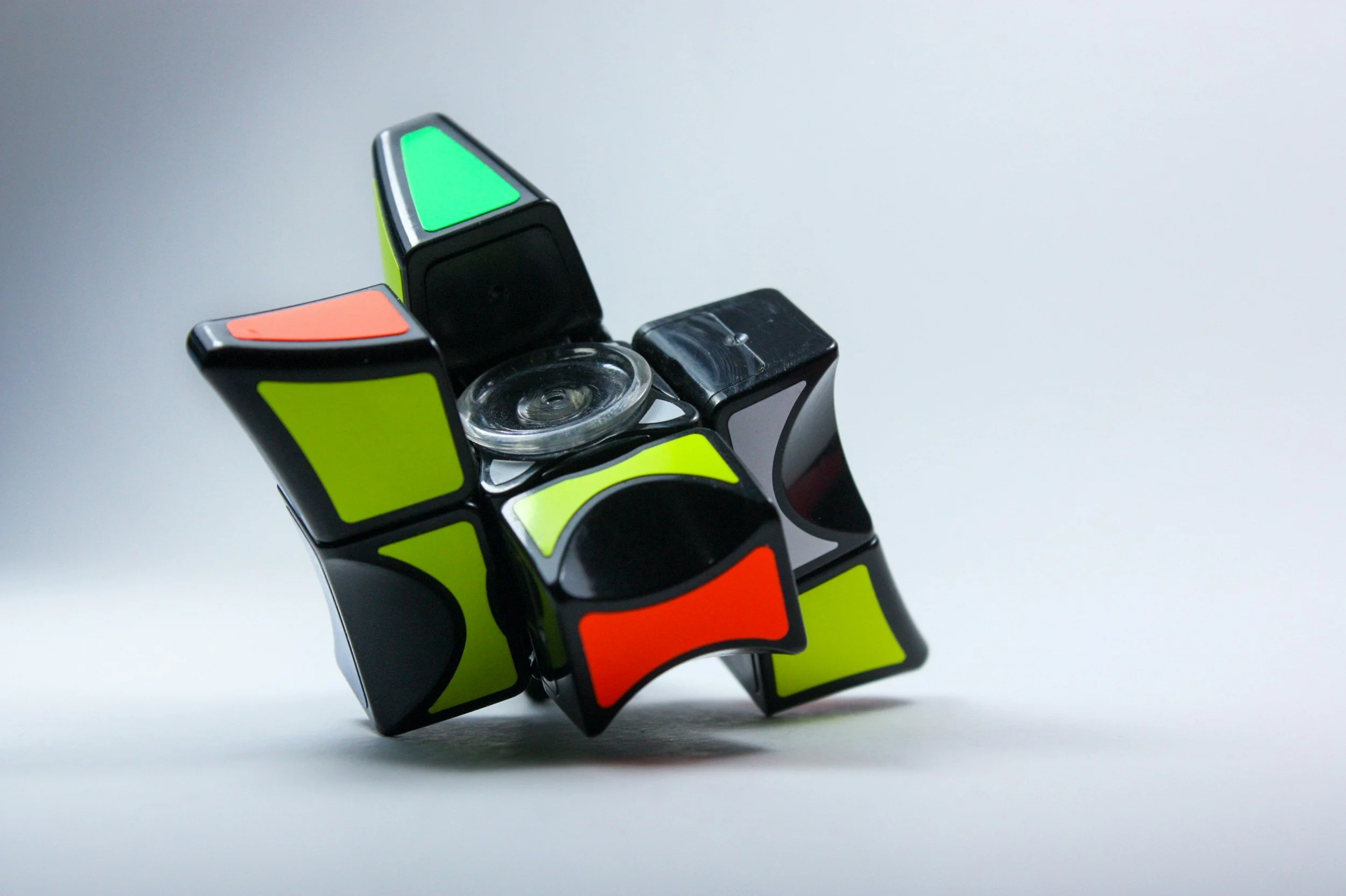
Personally I’m a cube fan for a fidget, but there are many environments where I wouldn’t bring the cube with me. It’s not necessarily being masked to bring the cube with me, but it is unmasked if I have it.
I had personally identified my ability to do this without even knowing what it was. I used to call it having two sides to myself, the corporate side who could play the game versus the fun side who rolls around on the floor with her friends for fun (I train Brazilian Jiu Jitsu). What I saw as “playing the game” was often putting the mask on to behave in the neurotypical way expected in these environments.
Some might argue that this isn’t unusual, that we all have to behave in a workplace appropriate fashion, but much like executive functioning on difficult tasks or dealing with overstimulating environments, the distinction is how difficult it is for the individual to make that change.
Most workplace standards are based on neurotypical norms and for those of us who are neurodivergent, our brains don’t work that way. Therefore it takes significant effort to learn and internalise the rules and continuing effort to put that into practise. While one person might turn up to a networking event excited to talk to people and make new connections, another has planned out every potential interaction in order to be able to attend.
Masking isn’t just adhering to neurotypical norms. It’s actively suppressing our natural neurodivergent traits to behave more neurotypical.
Want to see how well you do at navigating workplace relationships?
Unlock your Neurodivergent Leadership Performance Score across the four domains that matter most for neurodivergent professionals: Internal Authority, Relationship Navigation, Strategic Decisiveness and Sustainable Capability.
The Case for Unmasking
A lot of neurodivergents diagnosed in adulthood reach this point because they’re tired. I’ve written about this extensively in my blog posts about hitting the wall, getting diagnosed and returning after burnout, but it’s very common for individuals to discover their neurodivergence because what was working before no longer works anymore. It’s the continuous cycle of pushing through that often results in, if not burnout, reaching a point where their biggest struggle is managing their energy enough to just get through the day.
The other scenario in which people get diagnosed is often when their child has been diagnosed, which is just a different kind of tired. Either way, when someone gets diagnosed, or re-discovers an earlier diagnosis, well into adulthood, they’re also usually pretty tired.

Often parents of neurodivergent children are extra tired due to needing to manage the needs of their neurodivergent child as well.
It’s in this post-diagnosis research phase that people tend to come across the concept of masking and when you’re already deeply tired from all of the above, the concept of taking off the mask and freeing up that energy is incredibly attractive.
It can also be incredibly empowering. Reclaiming that energy and showing up in a way that feels more authentic can feel incredibly powerful. In addition, finding other neurodivergents with shared experiences that you don’t need to mask around is both validating and inspiring. It can become a way of embracing your neurodivergence and advocating for greater acceptance and inclusion.
All of these benefits are fantastic, I mean the energy saving alone is valuable enough that it can lead to the question: Why would I ever mask again? But before we can start answering that question we do need to acknowledge something important: Unmasking isn’t always that easy either.
Why Unmasking Can Be A Challenge
Often when we’re told to unmask, it’s phrased in a way that’s quite simplistic: Stop doing it. Stop suppressing your neurodivergent traits. Don’t do that. For some people, it is that simple but for others… We’ve been masking for so long that we don’t know what is masking and what is just who we are and how we show up.
We developed the ability to mask for a reason. Neurodivergent children are chastised from a young age for not being “normal” (aka neurotypical), whether that be by people in authority or peers. In fact our peers are very good at identifying and policing “unusual” behaviour during our formative years.
Much like we learn to walk by failing over and over again and adjusting, we learn to mask by paying attention to those social cues and adjusting our behaviour accordingly. Of course some people are better than others at picking up and adjusting to this feedback, but for people who are diagnosed later in life chances are it’s because your neurodivergent traits were missed when you were younger because you were so good at masking.

Sometimes we don’t realise how much we learned through trial and error instead of being taught.
Diagnosis is often destabilising, leading to questions of “How much is my personality and how much is my neurodivergence?” (I tackled this topic in one of my earliest articles). With this context, it can be really hard to know when we are masking versus just being how we naturally are in this situation.
This questioning itself takes energy as well, turning unmasking into a different kind of mask, one where we try and learn how we should be or run experiments to try and figure out what’s natural.
It’s because of this that I’m not onboard with the blanket encouragement for people to unmask. As I’ve said, there’s nuance, and there might even be reasons you might not want to unmask in certain situations at all. So let’s talk about them.
The Case for Not Unmasking
It is a fact of life that whatever we choose to do has consequences, both positive and negative, and masking is no exception. It would be disingenuous to talk about unmasking without talking about the potential negative consequences.
Unfortunately the place I have to start is the stigma. Not everyone is educated about neurodivergence. Not everywhere is neurodivergent safe, let alone neurodivergent friendly. And while yes, it would be noble to advocate for your neurodivergence to try and make these spaces more inclusive, when you have a full time job and a family to take care of as well, it would be unfair to expect the full time job of neurodivergent advocacy on top of that. Your livelihood, and in the worst case your physical safety, are allowed to take priority over advocacy in these scenarios.
The second potential negative side to unmasking is that you will be required to do education at some point. Even people who deeply care about you might not understand. They’re not being malicious, they’re not trying to shut you down. They just don’t understand.

Sometimes things are just so far from someone’s experience that they really struggle to understand. This doesn’t have to be malicious, it’s just part of the fundamental complexity of being human.
Even if they make the effort to do their own research to try and understand, they will learn about neurodivergence in general, but that doesn’t mean they know about YOUR neurodivergence. Everyone’s neurodivergence presents differently and often we have to teach people how to work with us specifically before we see the real benefits of unmasking.
But again, that unmasking has an energy cost. It is hard to explain to someone who doesn’t understand. It can be very difficult emotionally if it’s someone we care about and they don’t understand. And they don’t have to be neurotypical to not understand, by the way. It is not uncommon to come across other neurodivergents who lack understanding despite sharing many of the same traits.
This is why I advocate for nuance about the conversation around unmasking. Because really, when it comes down to it, it’s a question of energy optimisation.
Optimising Energy through Masking
So how do we balance our energy and masking? The answer is the word “intentionality”. When I work with clients, we talk about masking as a tool, one that they can use intentionally. Among close friends and family, investing the time into education can pay dividends because having trusted spaces in which you can unmask, whatever that looks like for you, is a huge energy win.
However, the important point is that trade off. Which situations is it worth investing energy into education so that you can unmask? Versus which situations is it not worth it at all?
I’m aware that it might look like I’m suggesting unmask at home and mask at work because it allows me to make the point clearer, but that’s actually not what I mean. I use the example of close friends and family because it’s a more obvious place to unmask, but the same question of energy trade off can be used within the workplace.
Your team, direct reports, manager and workplace friends are all candidates for considering for unmasking. The answer of course depends on your individual relationships and requires answering the question “is it worth it to unmask in this situation?”
If you need to get a report from Michael in the funding department once a quarter, is it really worth your time to invest in autism education when you only speak to him for half an hour every three months? In this situation, the energy efficiency of masking is worth it.
Because that’s what the conversation about unmasking really is. The conversation shouldn’t be about whether to unmask or not, full stop. It should be about when, where and with whom is unmasking worth it.
The best part of this way of looking at it is that you don’t have to answer it now. It’s a continual process as you move through life and work out how you want to show up in various situations. It’s in your control, but without pressure to come up with the final answer. You can work it out over time.
And of course if you would like help working out your unmasking journey as a neurodivergent leader, this is the kind of thing I help with. I work with neurodivergent leaders to navigate workplace relationships and politics, tackle impostor syndrome and make better strategic decisions, all in a way that works with their unique brain.
Whether you’re diagnosed or not, open about your neurodivergence at work or not, or unmasked or not, I can help you work out what leadership development looks like for you. Get in touch to find out more.
Ready to Define Leadership on Your Terms?
If you’re ready to stop trying to fit into someone else’s leadership mold and start building confidence your way, I’d love to help. Book a Neurodivergent Leadership Coaching Call or Explore more leadership transformations here.
Leadership doesn’t need to look “normal” to be powerful. It just needs to look like you.
Want to see more?
Sign up with your email address to receive the latest thoughts on neurodivergent careers and leadership.